Launching court text reminders? 7 ways to make sure the public trusts them
Scam texts have made every real message harder to believe. Fake court notices demanding payment now flood phones nationwide, training people to treat any court text as a trap. That is the trust tax: when scammers impersonate courts, the honest court pays, as residents ignore a real reminder and miss their date.
You can get ahead of it, and the most useful lever a court controls is not a warning buried on a website. It is marketing your program loudly and clearly before the first reminder goes out, so residents expect the text, recognize it, and know how to check it. Here is the Go-Live checklist we walk through with courts.
1. Announce the program before you send a single reminder
Residents trust messages they expect. Put out a short press release, post it on the court's website, and share it on the social channels the court or county already uses. Say plainly that the court is starting text and email reminders for upcoming court dates, when it begins, and that signing up (or staying enrolled) is free. A program the public has heard of is a program the public believes in.
2. Publish the exact number your reminders come from
This is the most important item on the list. Tell the public, in writing and in advance, the specific phone number your court's reminders will come from, and state that legitimate reminders come only from that number. Publishing the number gives residents a fixed reference to check an incoming text against, instead of a guess made under pressure. Toll agencies learned this the hard way: after fake toll texts swept the country, E-ZPass Virginia began publishing the numbers from which its genuine texts come, and the Pennsylvania Turnpike told drivers exactly which number its messages would come from and what they would say before it started texting at all.
3. Put a QR code and the program details on a flier
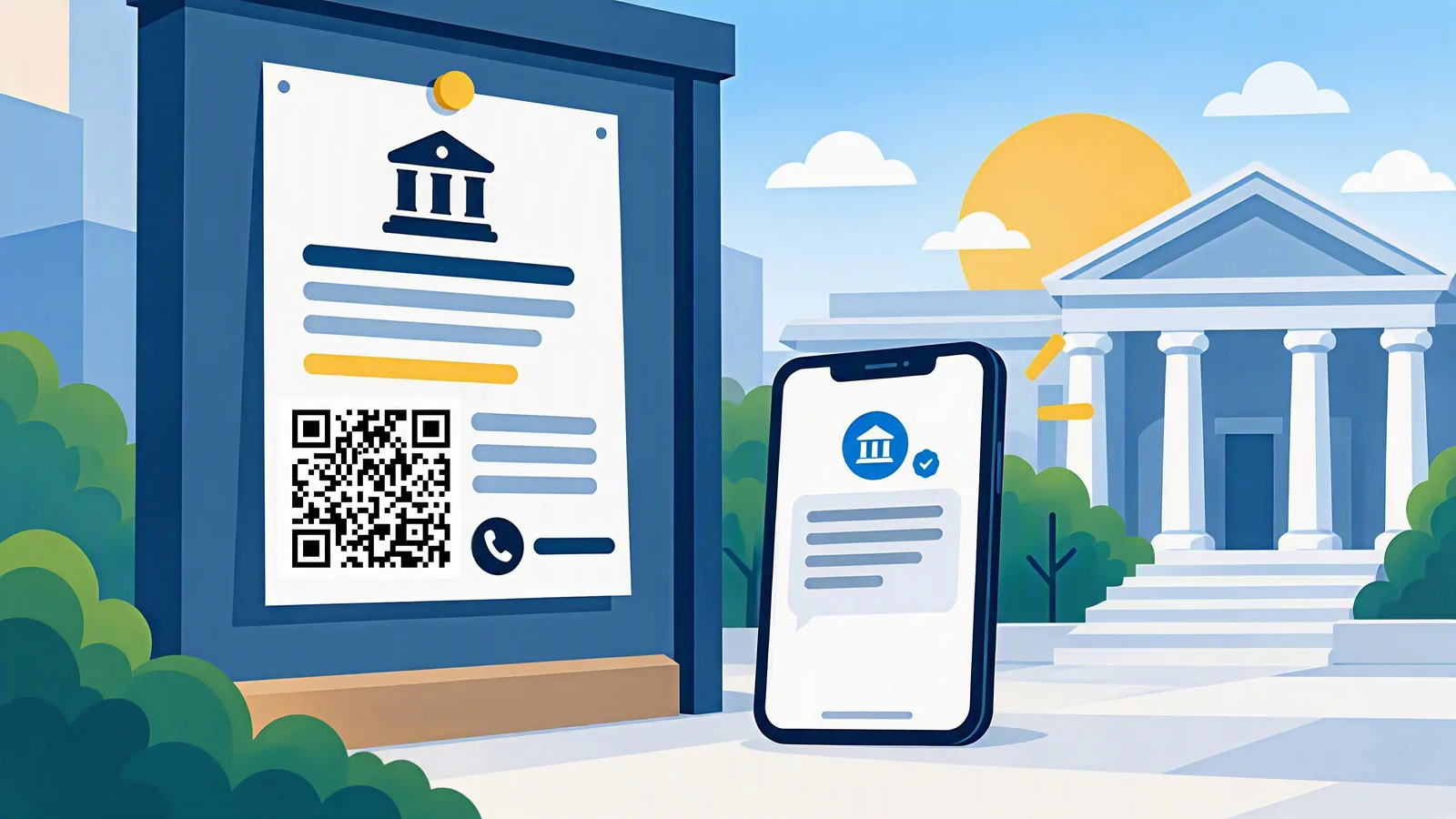
A one-page flier does a lot of work at the counter, in the mail, and on a courthouse bulletin board. Include the program name, the official reminder number, a short “what a real message looks like” line, and a QR code linking to the court’s enrollment or information page. Hand it out at every point of contact: citation, booking, arraignment, and the clerk’s window. The goal is for a resident to see the program from the court before they ever see a text about it.
4. Say plainly what the court will never do
Scams work by asking for something a real court never requests. Spell out the bright lines so a resident can spot a fake on sight: the court will never demand payment by text, never accept a fine in gift cards or cryptocurrency, and never send an arrest warrant by text. This is the tactic federal agencies use to cut through the noise. The IRS tells the public flatly that it does not initiate contact by text, email, or social media, and the Social Security Administration's Inspector General tells people to think "scam first" about any unexpected message claiming to be from that office. Your "never" list helps the public do the same.
5. Point people to one official place to verify
Every outreach effort should point back to a single source of truth: the court’s website and phone line. Tell residents that if they are ever unsure whether a message is real, they should not use any link or number in the text itself. Instead, look up the court directly and ask. Much of the scam's power comes from the public having nowhere independent to check. Give them that place, and you take away one of its biggest advantages.
6. Keep payment instructions on your own turf
If your court collects fines or fees online, tell the public to pay only through the link on their official court notice or the court’s website, never through a link that arrives out of the blue in a text. This is exactly the guidance our payments product, GovPayPlan, gives the public, and it applies to every court, regardless of how it takes payment. A resident who has learned to start from the court’s official site is far less likely to fall for a lookalike payment page.
7. Repeat it, and measure as you go
One announcement is a start, not a campaign. Refresh the message when a new scam wave hits your area, post reminders about the official number a few times a year, and keep the flier stocked at the counter. Where you can, check whether the outreach is landing; a short survey or a simple feedback line tells you whether residents actually know the program is real. The agencies that handle impersonation best treat public education as ongoing, not one-and-done. The more consistently residents hear what a real court message looks like, the faster they recognize it and the less impact the next fake can have.
One technical note worth knowing as you launch: on a modern reminder platform, your court’s messages come only from your own activated number, registered to your agency through the carrier system that legitimate senders use and scammers cannot easily access. That is what makes item 2 possible. The number you publish is a number only your court can send from. The marketing is what makes that fact useful to the public.
The tools to send a message the public can trust already exist. The work that is easy to skip, and the work that matters most at launch, is telling people what your real message looks like before a scammer tells them something else.
Schedule a Demo
Sources
E-ZPass Virginia, "Active smishing scam," 2025 (primary): https://www.ezpassva.com/news-resources/news/2025/active-smishing-scam.html
Pennsylvania Turnpike / CBS Philadelphia, "Pennsylvania Turnpike to text drivers about unpaid tolls," April 22, 2026 (secondary): https://www.cbsnews.com/philadelphia/news/pennsylvania-turnpike-text-message-scams-unpaid-tolls/
Internal Revenue Service, "Tax Scams / Consumer Alerts" (the IRS does not initiate contact by text, email, or social media) (primary): https://www.irs.gov/newsroom/tax-scams-consumer-alerts
Social Security Administration, Office of the Inspector General, "Unexpected letter, text, or email from the SSA OIG? Think scam first," November 12, 2025 (primary): https://oig.ssa.gov/scam-alerts/2025-11-12-unexpected-letter-text-or-email-from-the-social-security-administration-office-of-inspector-general-think-scam-first/
GovPayPlan (pay using the link on your official notice or the agency's own website) (primary, publisher-affiliated): https://govpayplan.com/